Black Joomla
Free Joomla Template Joomla Extensions
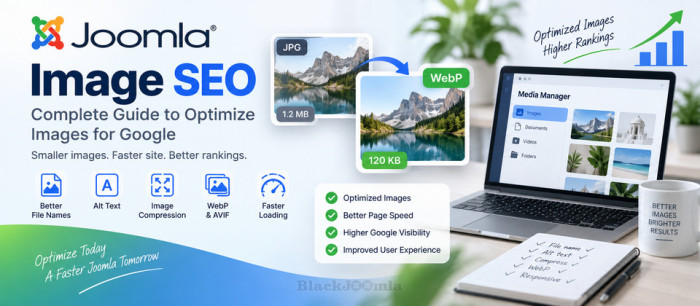
Images are an essential part of modern Joomla websites, but poorly optimized images can increase page size, slow down loading times, and make it harder for search engines to understand your visual content. Proper image optimization can improve usability, accessibility, performance, and the overall SEO quality of a Joomla website.
Joomla provides several ways to manage images, while extensions, templates, K2, and modern image formats such as WebP and AVIF can provide additional optimization options. In this guide, you will learn how to optimize Joomla images for search engines without sacrificing visual quality.
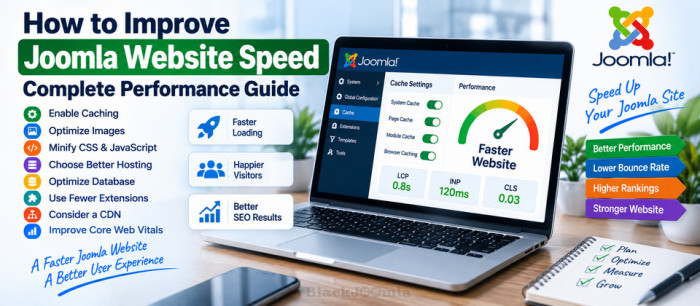
Website speed is an important part of maintaining a successful Joomla website. A slow website can make navigation frustrating for visitors, increase abandonment, and make it harder to provide a good experience on mobile devices.
Improving Joomla performance is not about enabling one magic setting. A fast website usually requires several improvements working together, including caching, image optimization, efficient extensions, good hosting, compression, and careful handling of CSS and JavaScript.

XT Adaptive Images is the best extension to generate responsive images. It packs Adaptive Images + HTML's new responsive image attributes (srcset and sizes) + Lazy Load + CDN in a single plugin.
JSpeed is the professional solution to boost your website performance and make Google happy increasing the PageSpeed Insights rank in a snap!

Increase the pagespeed of your website with Aimy Speed Optimization. Eliminate render-blocking (CSS and JavaScript), minify HTML, make use of browser caching and compression and optimize image loading
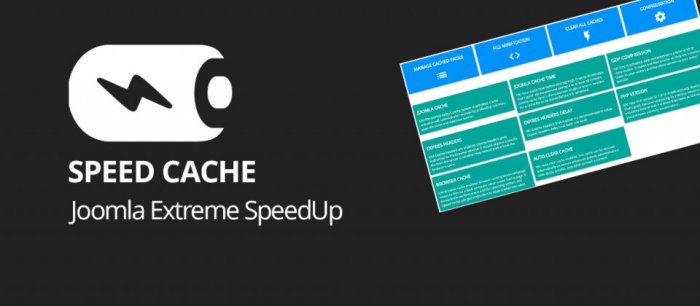
Joomla have a native cache and Gzip compression system, that's a good start.
Speed Cache comes over as a natural improvement of the Joomla page cache system with a lot of performance, compatibility and features enhancement.

Speed up your Joomla!, WordPress, Drupal & Magento website instantly with JCH Optimize. This plugin combines your external JavaScript and CSS files into one to minimize expensive http requests. These files can be minified and gzipped to reduce bandwidth and further optimize download time. Typical results after plugin is configured with optimum settings for your site is a 6-10 point jump on Page Speed. This results in enhanced user experience and can favourably affect website traffic and Google ranking