Black Joomla
Free Joomla Template Joomla Extensions
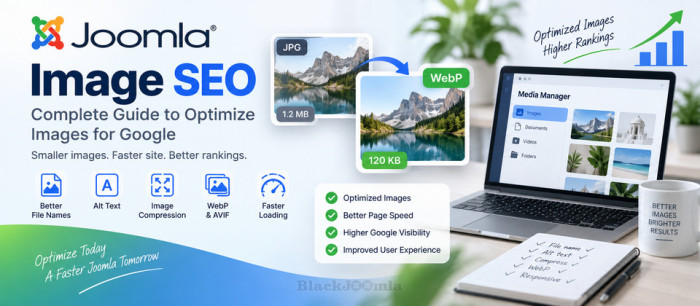
Images are an essential part of modern Joomla websites, but poorly optimized images can increase page size, slow down loading times, and make it harder for search engines to understand your visual content. Proper image optimization can improve usability, accessibility, performance, and the overall SEO quality of a Joomla website.
Joomla provides several ways to manage images, while extensions, templates, K2, and modern image formats such as WebP and AVIF can provide additional optimization options. In this guide, you will learn how to optimize Joomla images for search engines without sacrificing visual quality.
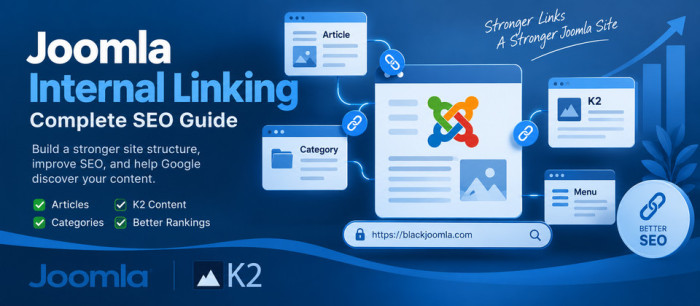
Internal linking is one of the most important parts of Joomla SEO. By connecting related pages with relevant internal links, you can create a clearer website structure, help visitors discover more content, and make it easier for search engines to understand the relationship between your pages.
Whether you are using Joomla Articles, Categories, or K2 content, a well-planned internal linking strategy can improve navigation, strengthen important pages, and support better crawling and indexing of your website.
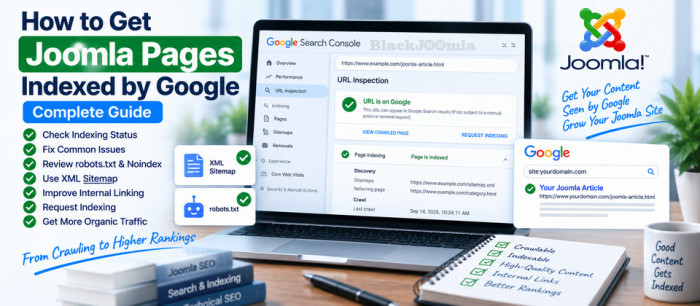
Getting a Joomla page crawled by Google does not automatically mean that the page will be indexed. Indexing depends on several technical and content signals, including crawlability, robots.txt rules, noindex directives, canonical URLs, HTTP status codes, internal links, sitemaps, and the overall quality of the page.
In this guide, you will learn how to get Joomla pages indexed by Google, how to diagnose indexing problems in Google Search Console, check robots.txt and noindex settings, submit an XML sitemap, improve internal linking, and fix common Joomla technical issues that can prevent pages from appearing in Google Search.

4Analytics is a state-of-the art Joomla extension that provides you with fully private analytics out of the box.
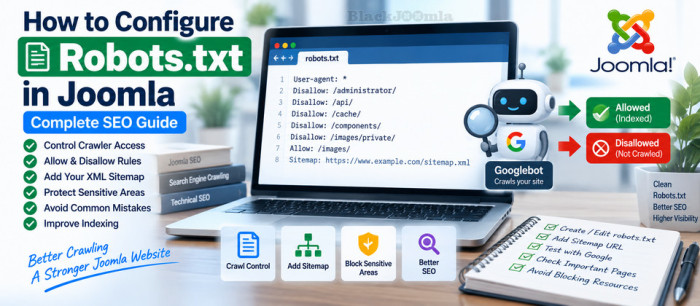
The robots.txt file is one of the simplest but most important technical SEO files on a Joomla website. It tells search engine crawlers which parts of your website they are allowed or not allowed to crawl.
In this guide, you will learn how to configure robots.txt in Joomla, understand User-agent, Allow and Disallow rules, add your XML sitemap, avoid common SEO mistakes, and understand the difference between blocking crawling and preventing indexing.
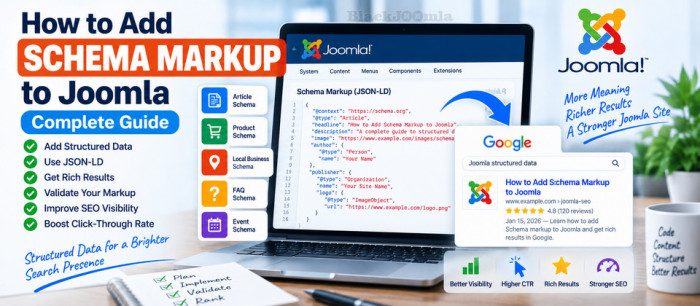
Schema markup is one of the most useful technical SEO techniques for helping search engines understand what a Joomla page is about. By adding structured data to your Joomla website, you can provide search engines with clearer information about articles, products, organizations, breadcrumbs, events, and other types of content.
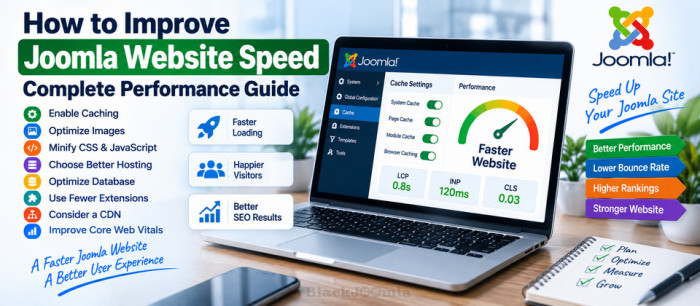
Website speed is an important part of maintaining a successful Joomla website. A slow website can make navigation frustrating for visitors, increase abandonment, and make it harder to provide a good experience on mobile devices.
Improving Joomla performance is not about enabling one magic setting. A fast website usually requires several improvements working together, including caching, image optimization, efficient extensions, good hosting, compression, and careful handling of CSS and JavaScript.
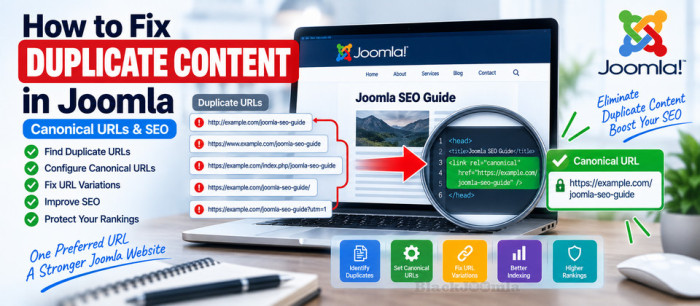
Duplicate content is a common technical SEO issue on Joomla websites, especially when the same article or page can be accessed through multiple URLs.
For example, Joomla can sometimes make the same content available through different menu structures, URL formats, domains, protocols, query parameters, or URL variations.
Google does not generally consider duplicate content on a website to be a spam violation. However, multiple URLs containing the same or very similar content can make it harder for search engines to determine which URL should represent the content in search results.
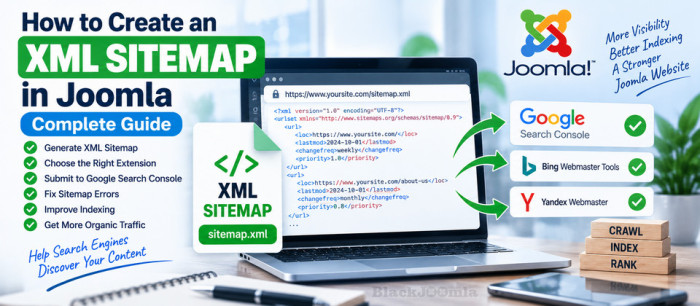
An XML sitemap is an important technical SEO tool for Joomla websites. It provides search engines with a structured list of URLs that are available for crawling and can help search engines discover pages that may not be easy to find through normal website navigation.
In this guide, you will learn what a Joomla XML sitemap is, how to create one, how to submit it to Google Search Console, how to check whether it is working correctly, and how to avoid common sitemap problems.
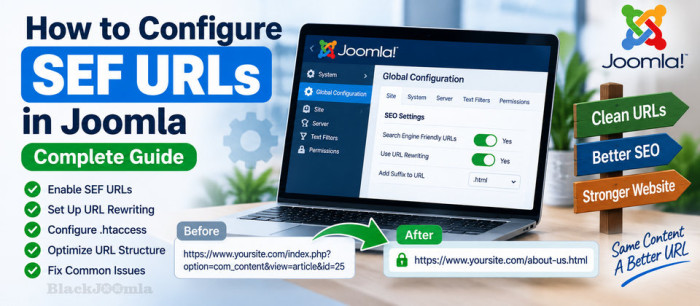
Search Engine Friendly (SEF) URLs are an important part of a well-structured Joomla website. Instead of displaying long URLs containing technical parameters, Joomla can generate cleaner URLs that are easier for visitors to understand and easier for search engines to interpret.
In this guide, you will learn how to configure SEF URLs in Joomla, enable URL rewriting, configure .htaccess, understand the main SEO settings, and troubleshoot common SEF URL problems.